Lots of things glow under a blacklight. How do I know it's not a fluorescent gems or mineral instead of uranium glass?
Lots of gems and minerals glow under a blacklight, but there are only two common cut and faceted gems found in jewelry that glow bright green, and that is uranium glass and lab spinel.
UV reactive spinel is a synthetic/lab-created gemstone that looks like and glows bright green just like uranium glass. Lab spinels that are yellow, green, aqua, paraiba blue, and dark teal are the ones that fluoresce green. They have the advantage of looking just like uranium glass, but they are much more durable. I have been selling these alongside my uranium glass jewelry for years and they are very popular. They also tend to be worth a little bit more than uranium glass. They are extremely beautiful in natural light.
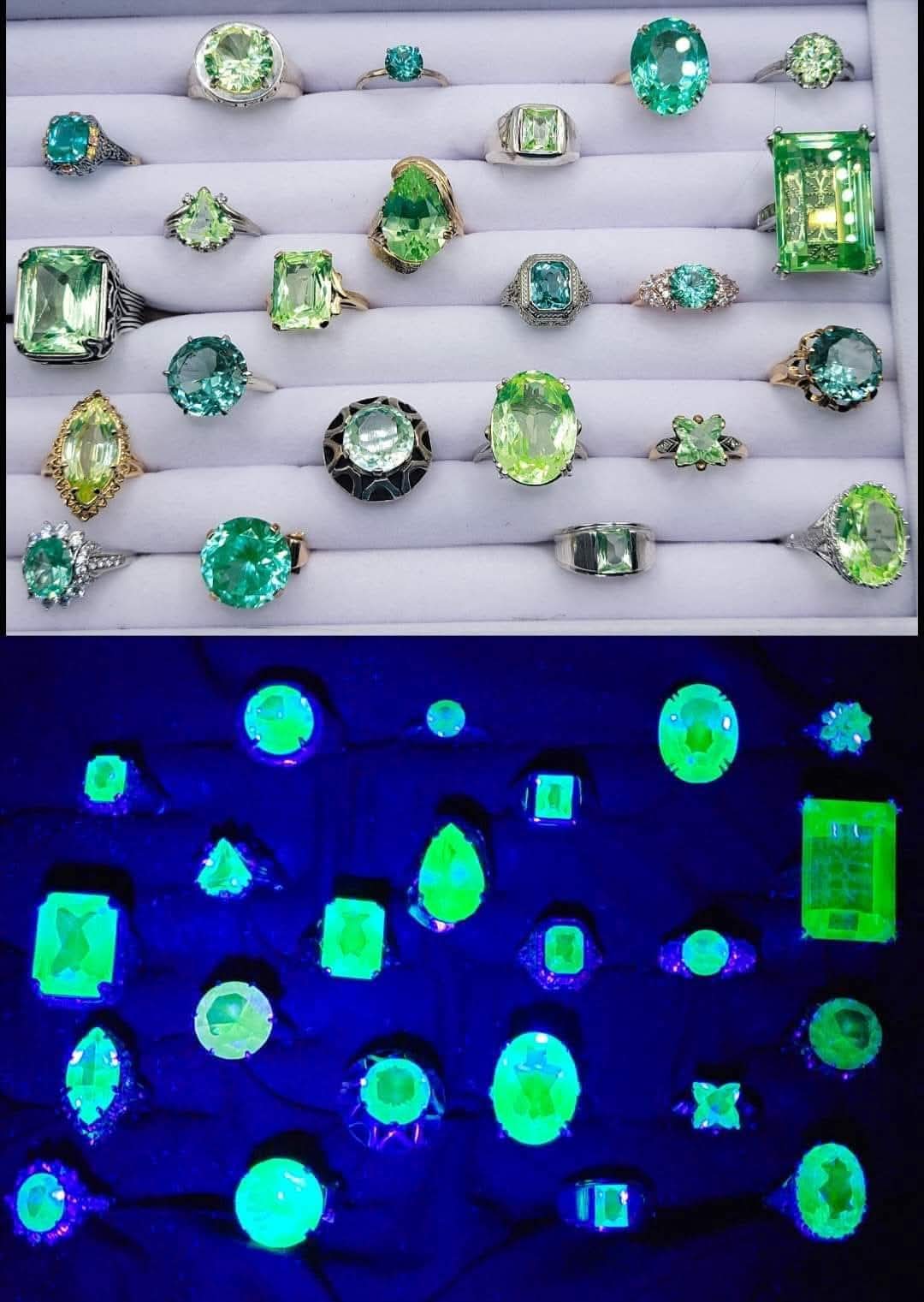
UV reactive lab spinel gemstone rings
Pictured in costume metal, sterling silver, and solid gold
If a faceted green gem glows bright neon green, it will be either uranium glass or spinel 99% of the time.
More information on identifying spinel vs. uranium glass
(Hyperlink)
UV reactive minerals such as willemite, yooperlite, and sodalite will not be found as faceted gems, and if found in jewelry at all, will look like chunks of rocks. These also usually require a 254nm short wave blacklight to glow.
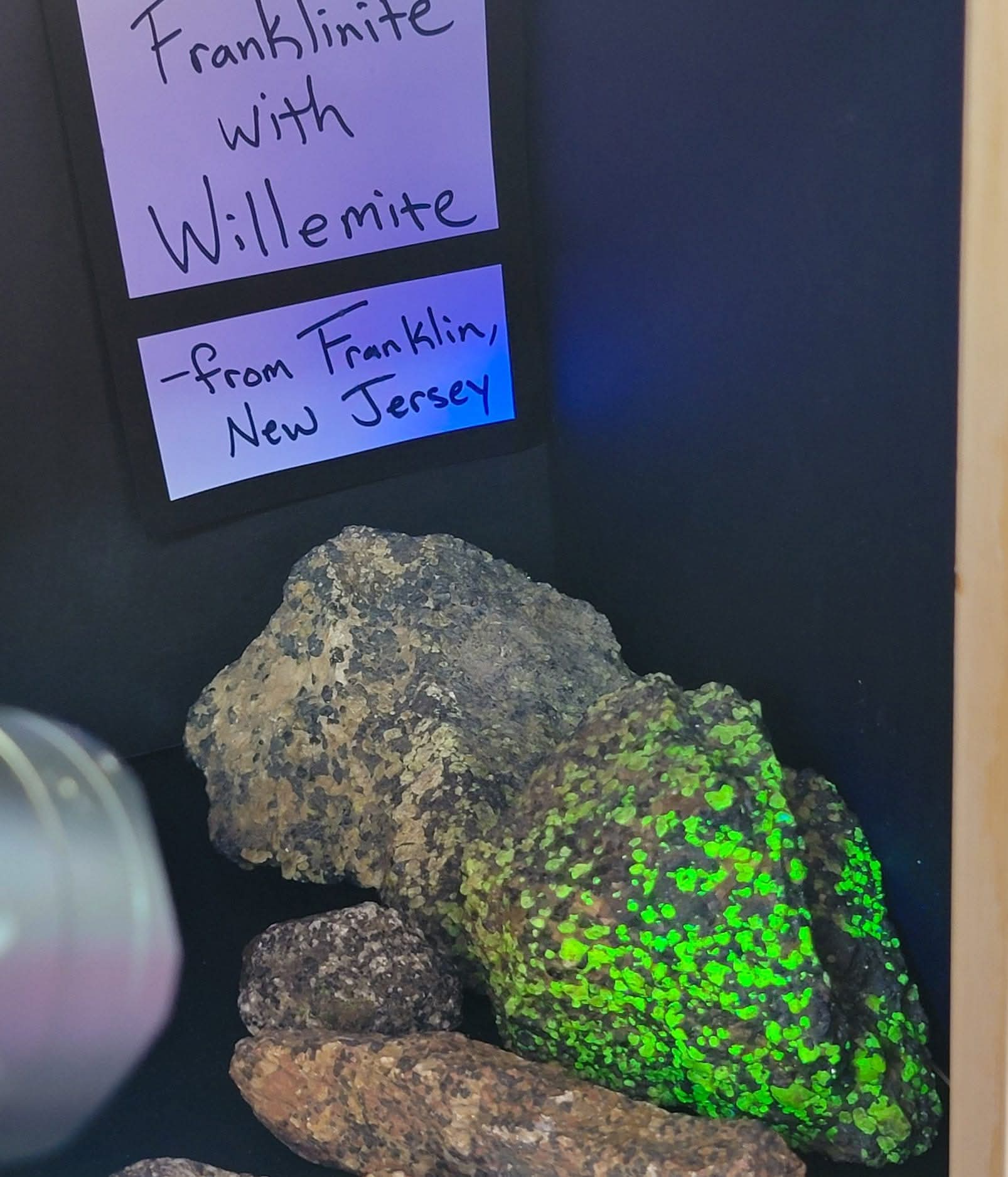
Willemite mineral specimen glowing under a 254nm short wave blacklight
Now with this said, uranium glass and spinels are not the only faceted gems that glow bright green, they are just the most common. Here are a few other green-glowing faceted gems that can be found in jewelry -
Diamonds
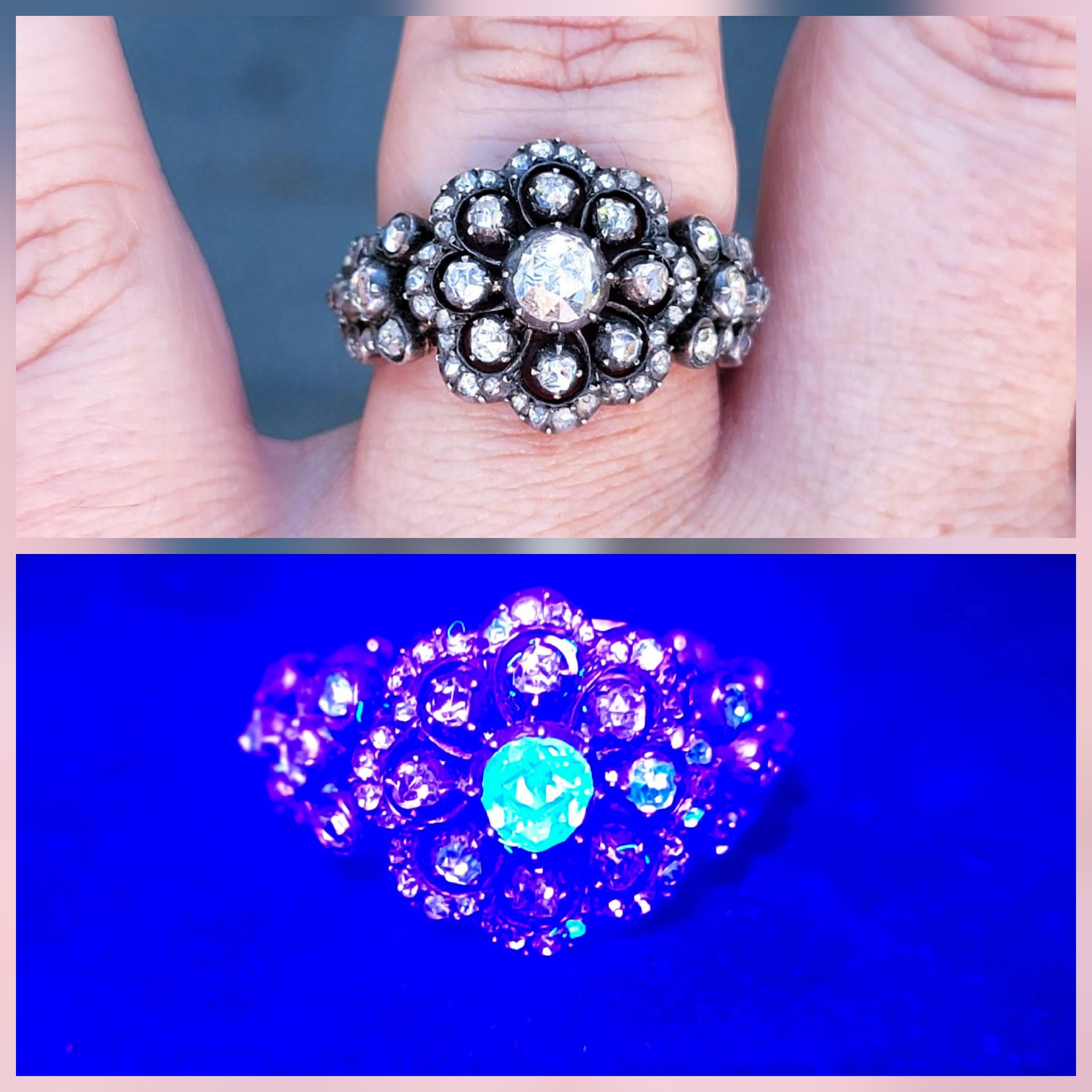
Green-fluorescent diamond in a c.1780 Georgian diamond ring
Natural diamonds that are formed near uranium deposits can glow bright green. It's also not uncommon to find natural diamonds that fluoresce bright blue. Lab-grown diamonds will not fluoresce. Fluorescence does not affect the value of the diamond.
Diamonds irradiated to intensify the color can also glow green. This is especially true for canary diamonds.
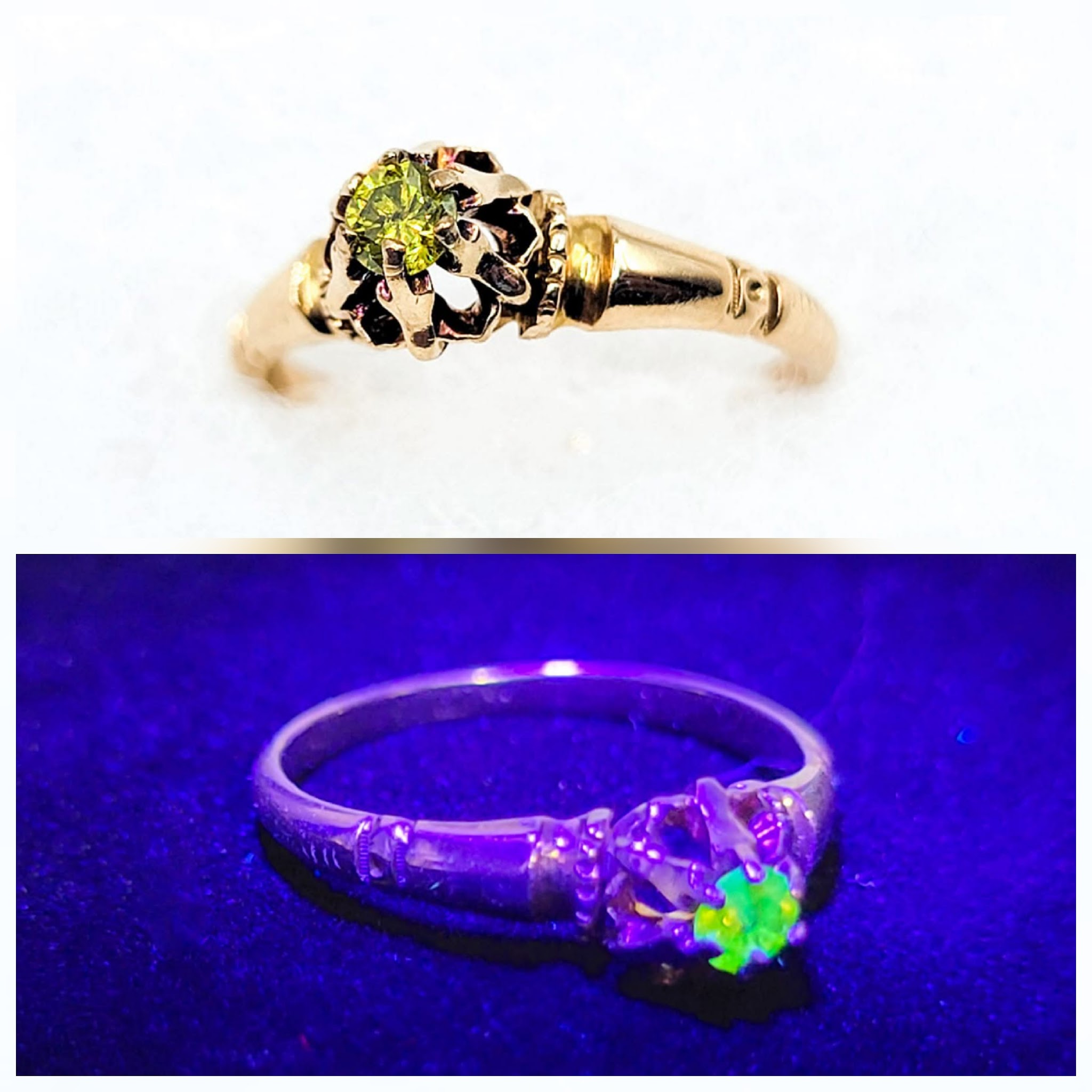
Victorian 14k gold canary diamond ring
Irradiated green diamonds can also glow green
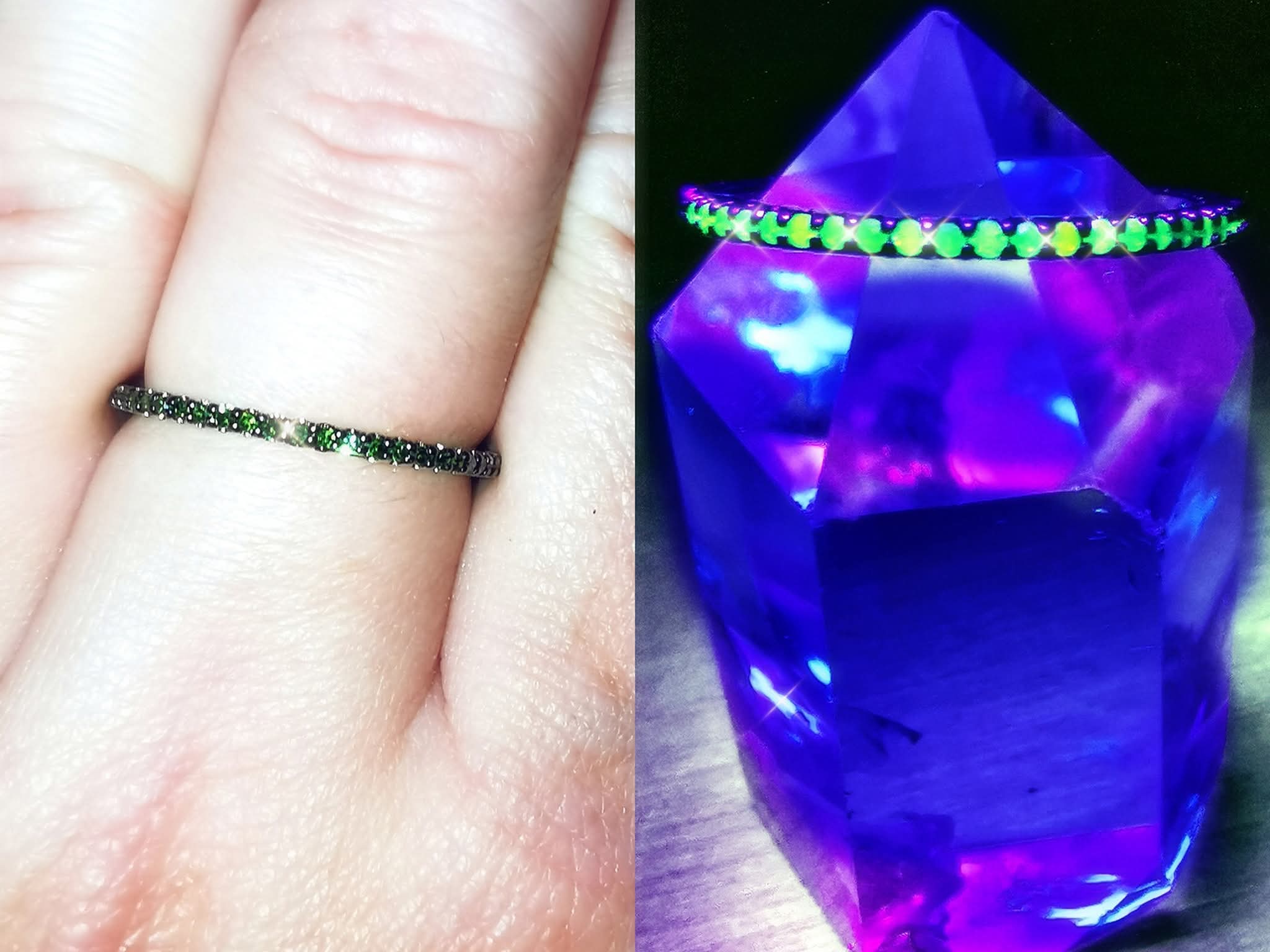
Green diamonds sterling eternity band
Pink ice cubic zirconia
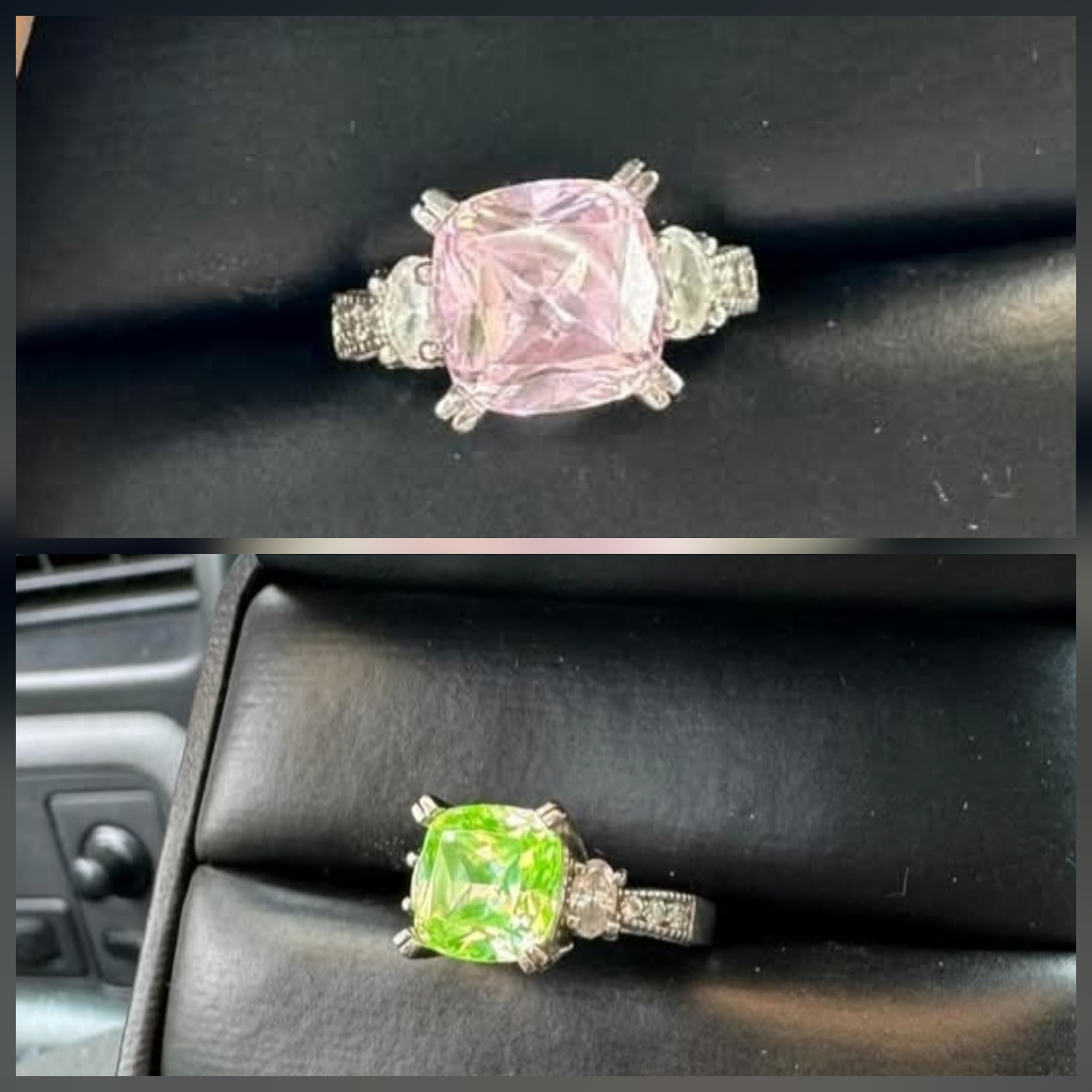
Pink CZs sometimes will look like they glow bright green, usually when folks are using a 365nm blacklight. 365nm blacklights should never be used for identification of uranium glass. Only 395nm can properly identify uranium glass.
See this link for more information on using a proper blacklight.
(Hyperlink)
If you find a piece of jewelry with a very light pink gem like this that glows green, it will be cubic zirconia. Under a proper 395nm blacklight they will barely glow, if at all. It is not known why pink CZs can be blacklight reactive. It is probably because they have manganese content used to color the stone pink. Pink CZs are cheap and common and generally not valued in the world of uranium glass jewelry collecting.
Some faceted “gems” can be made of plastic, acrylic, or have neon pigment added to them. More information on that here
(Hyperlink)
There are some specialty gems that glow bright green, but they will never be “randomly” found in unidentified jewelry. They are rarer, expensive materials that are purposefully chosen and used by jewelry designers, and will be identified for what they are.
Hyalite opal
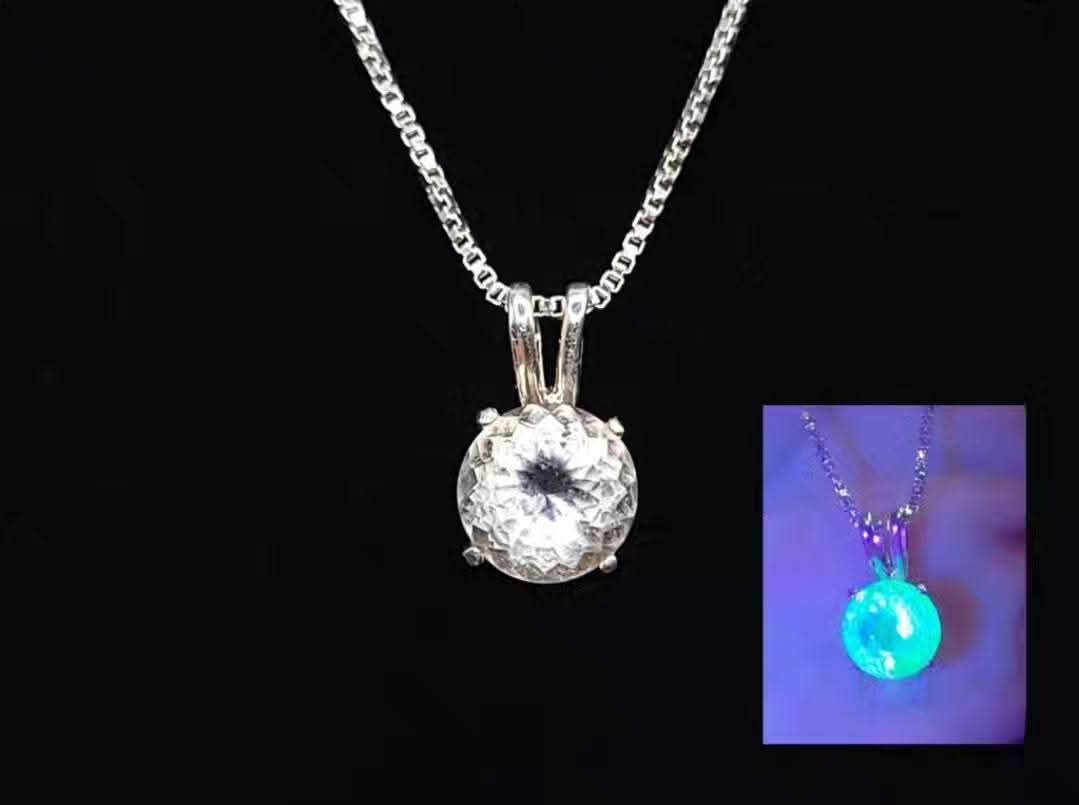
Hyalite opals are found in Mexico. Hyalite opals glow green because they contain uranium impurities. Facet-quality hyalite opal is rare to find. Rough specimens are much more common.
Rough hyalite opal
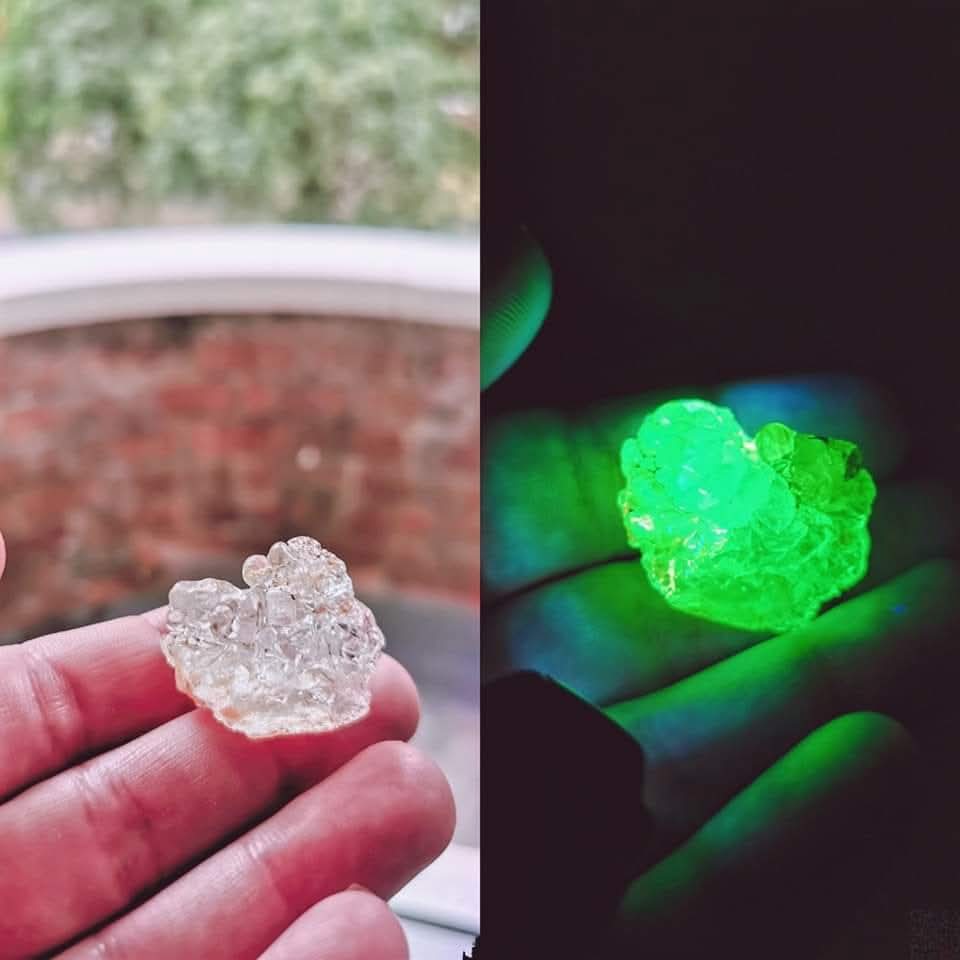
Like most opals, hyalite opals are very soft and prone to breakage. They are not common jewelry items. If present in a piece of jewelry, they will be identified as such. You won't find them at a random thrift store. I do like to make pieces with them if I can find good facet-quality gems.
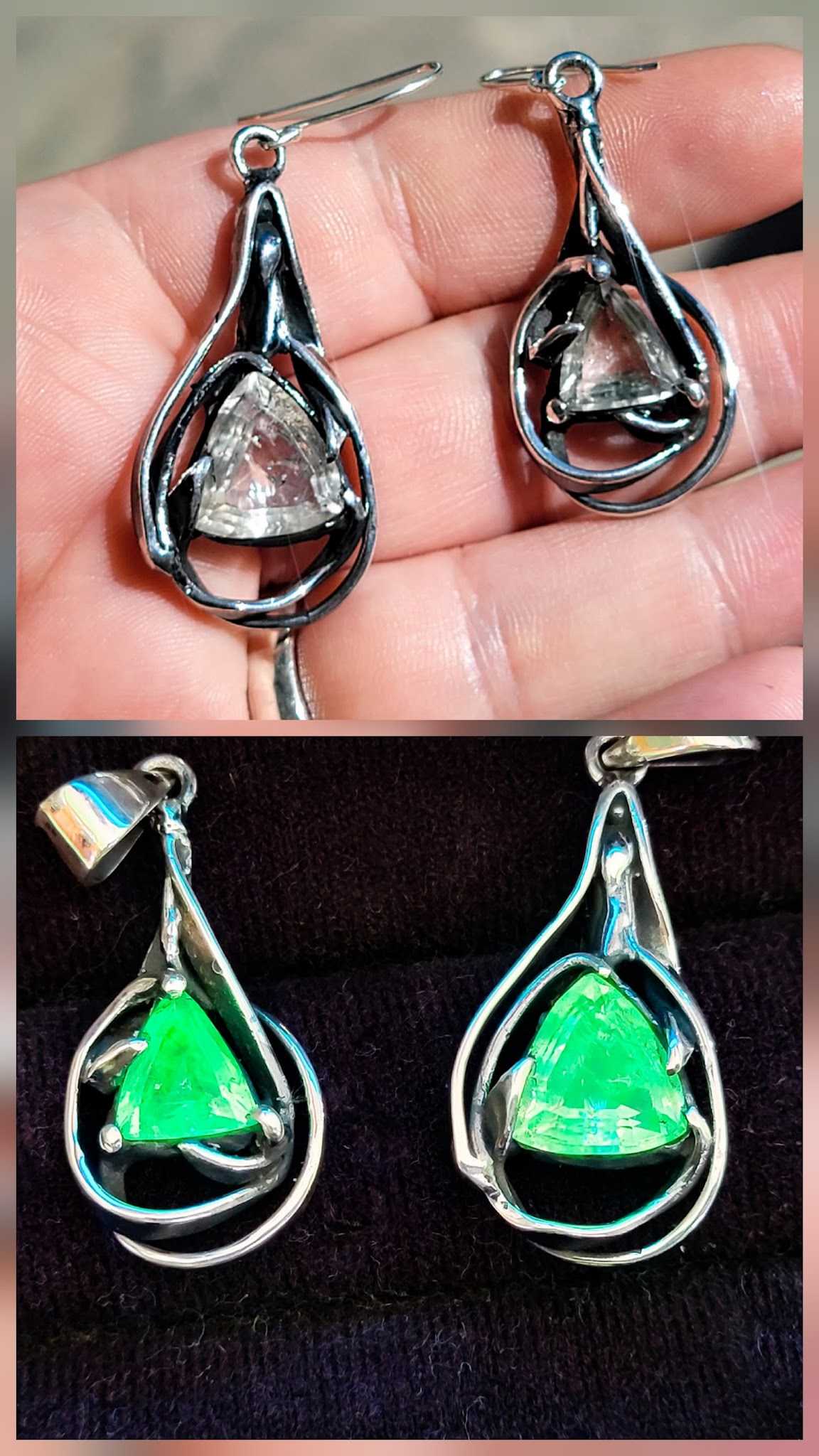
Sterling silver hyalite opal earrings I bought from a jewelry designer in Mexico
Another specialty faceted gem that glows green is lutetium aluminum garnet
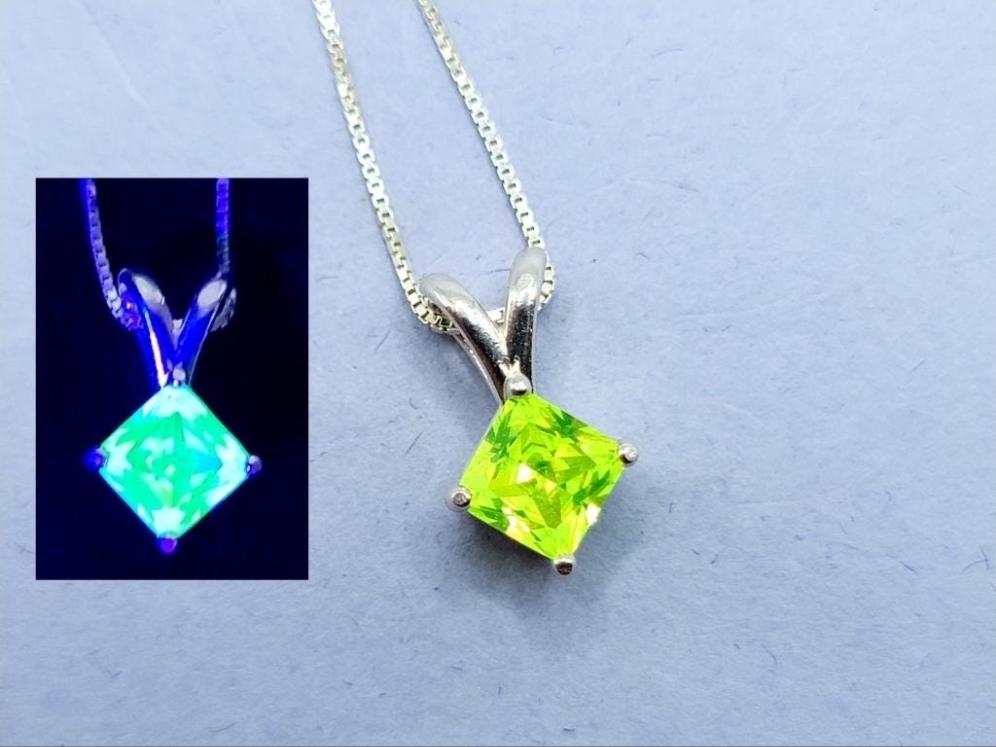
Lutetium aluminum garnet, or LuAG, is an extremely specialized and very expensive material. It is a lab-grown crystal used in lasers and medical equipment, and as a scintillator for detecting radiation. Its value as a faceted gemstone was only recently discovered, appreciated for its brilliant green color in natural light, and also for its UV reactive properties. A single lab-grown LuAG crystal costs several thousand dollars. This is another material that won't be found unidentified in random shops.
Sometimes when people say “lots of jewelry glows under a blacklight” they are referring to gemstones that glow red or pink
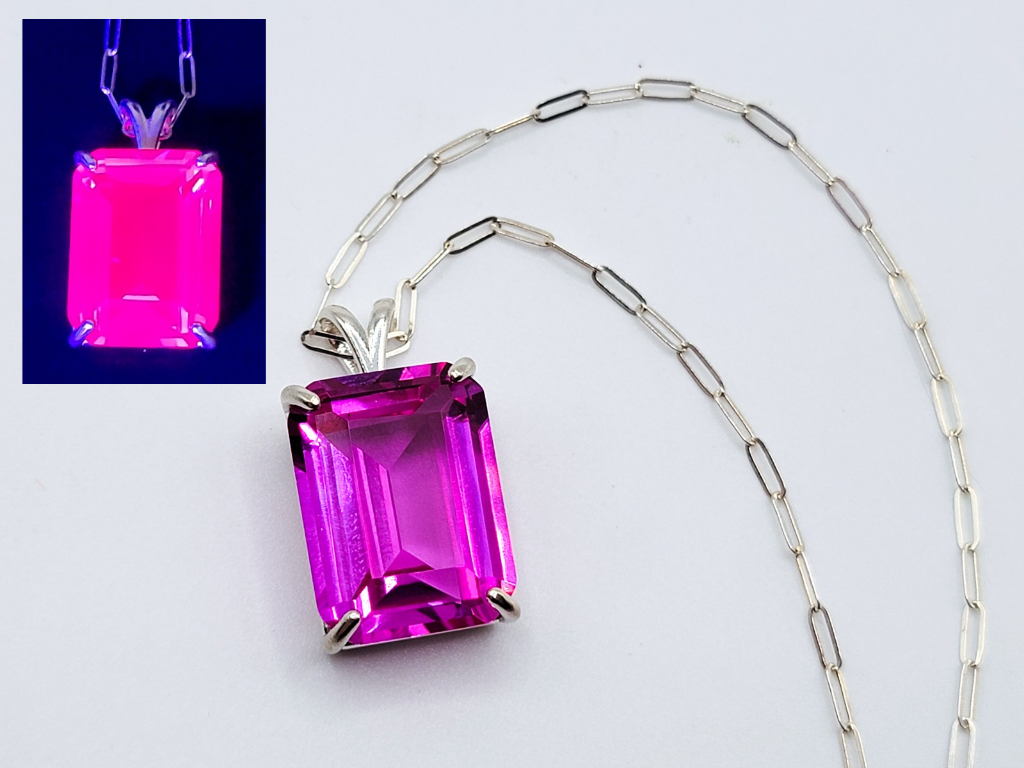
Lab pink sapphire necklace
There are lots of gemstones glow pink/red due to chromium content. This can include rubies, sapphires, emeralds, natural spinels, chrome tourmaline, alexandrite, some garnet, and chrome diopside. This is not an exhaustive list. Lab-made gems tend toward a brighter glow because they have less iron content. Iron content in natural gems can cancel out the chromium glow.
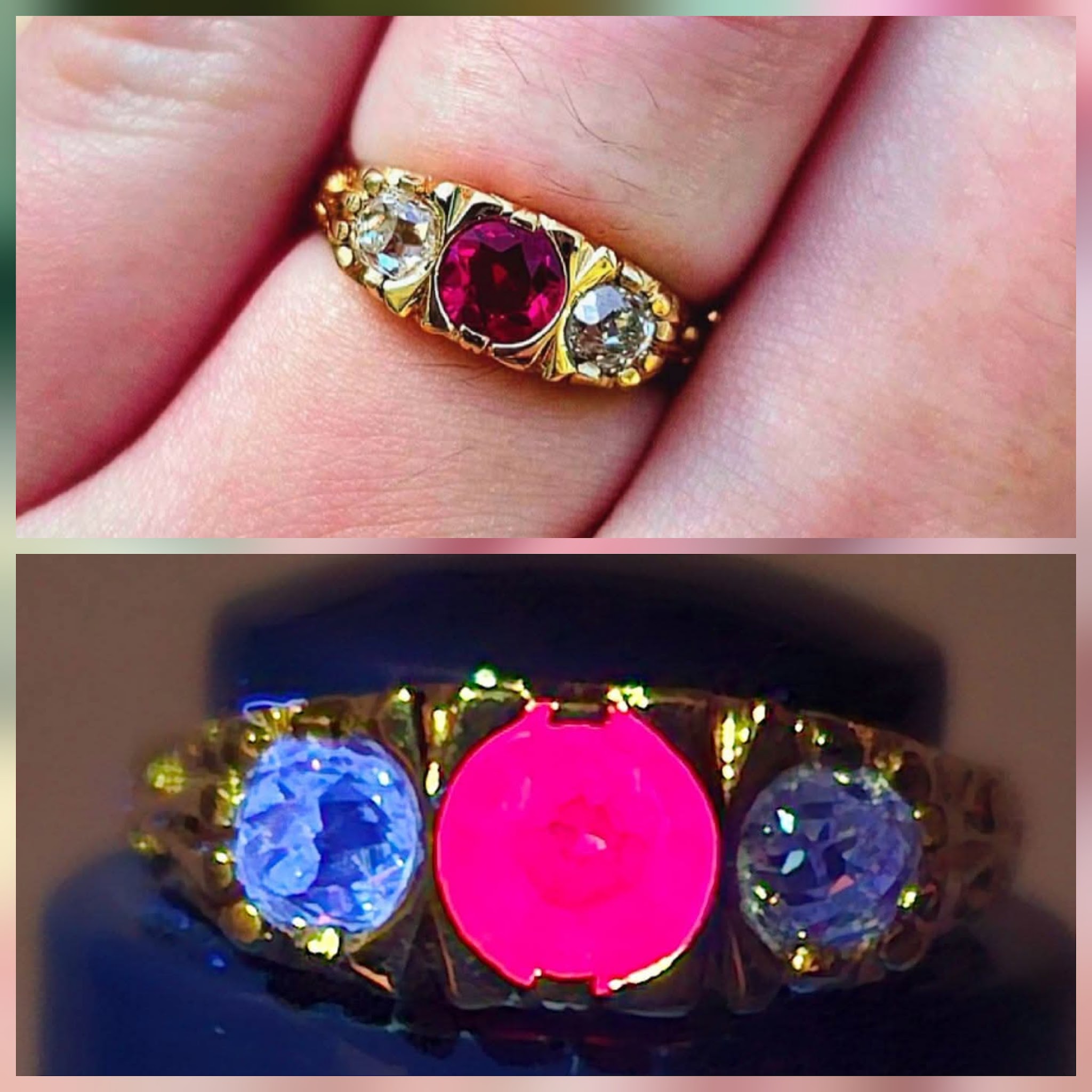
Antique 14k diamond and ruby ring
Both the ruby and the mine cut diamonds exhibit fluorescence
Chrome tourmaline
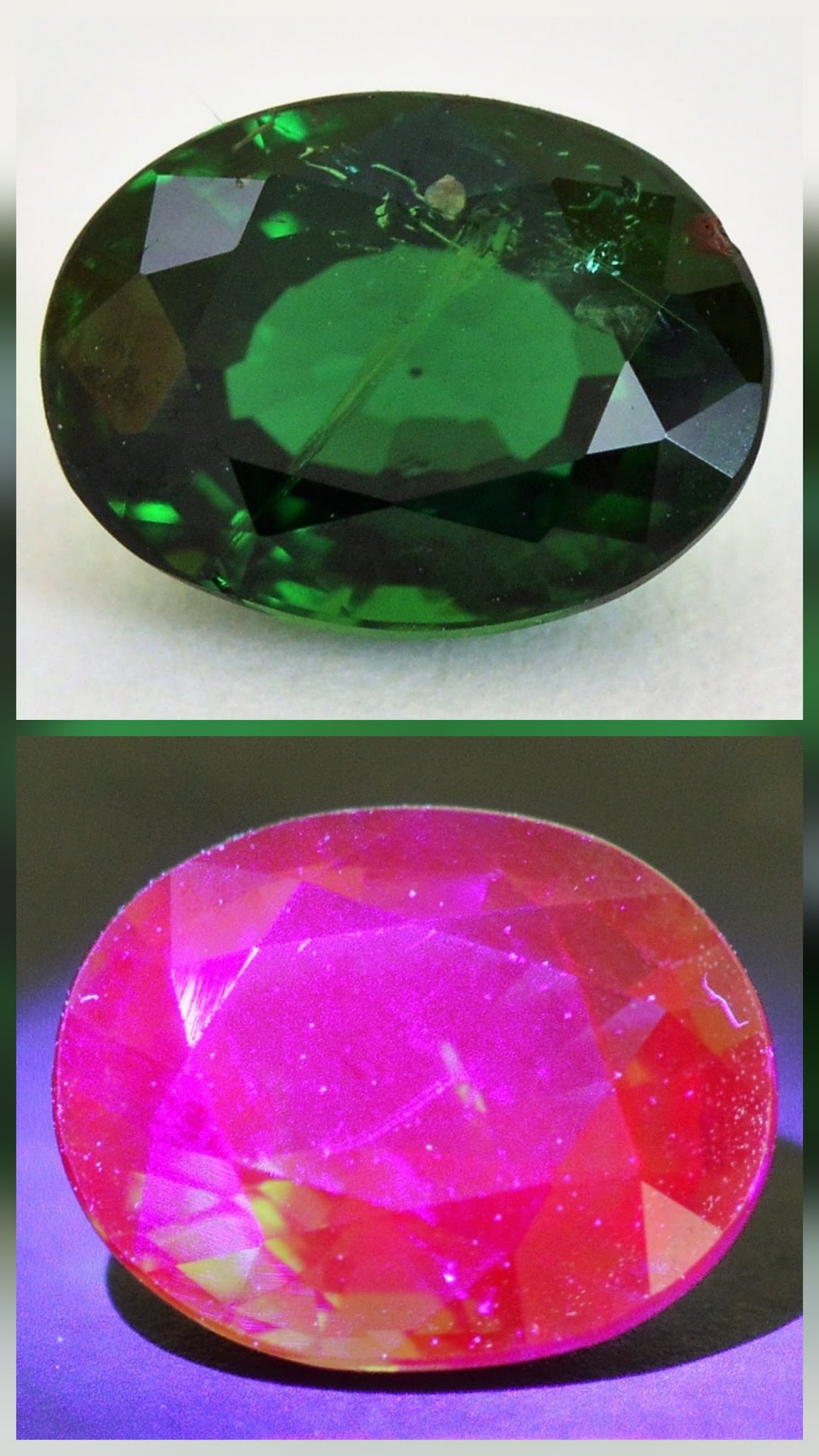
Chrome tourmaline is the only variety of tourmaline that will occasionally fluoresce